
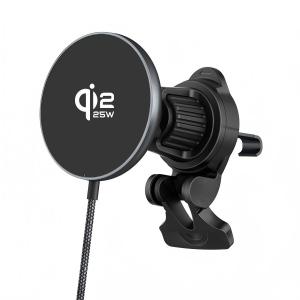
Here’s a breakdown of the key reasons:
1. Combating Inefficiency and Heat Generation
The core of the issue is energy conversion loss. Wireless charging works through electromagnetic induction. During this process, a significant amount of energy is lost as waste heat, rather than being transferred to the phone’s battery. This happens due to:
Resistance in Coils: The copper coils in both the charger and the phone have electrical resistance, which generates heat when current flows through them.
Electromagnetic Losses: Not all the magnetic field generated by the charger’s coil is captured by the phone’s coil, leading to eddy currents and other losses that manifest as heat.
Misalignment: Even minor misalignment between the phone and the charger increases inefficiency and heat.
The more power you push through the system (e.g., for fast charging), the more waste heat is generated.
2. Enabling and Sustaining High-Speed Charging (Especially for Qi2 MPP)
This is the most critical reason for a fan. Qi2 introduces a new standard called MPP (Magnetic Power Profile), which allows for magnetic alignment, similar to Apple’s MagSafe.
Performance Throttling: Both phones and chargers have built-in temperature sensors. If the device gets too hot, the charging chip will drastically reduce the power input to a slow “trickle charge” to protect the battery and internal components. This defeats the purpose of a fast charger.
The Fan’s Role: The active cooling fan actively pulls heat away from the charging coils and the back of the phone. By keeping temperatures down, the charger can maintain the highest possible power transfer for a longer duration, ensuring you get the full, advertised fast-charging speed.3. Battery Health and Longevity
Lithium-ion batteries (like those in your phone) are highly sensitive to heat. Excessive heat is the primary enemy of battery health, accelerating its chemical aging and reducing its overall lifespan.
A cooling fan helps protect your phone’s battery by preventing it from being exposed to high temperatures during charging, thereby preserving its capacity and health over time.
4. Component Protection and Safety
The charger itself contains electronic components (chips, capacitors, coils) that can degrade or fail if consistently operated at high temperatures. The fan:
Protects the charger’s internal circuitry, ensuring its own reliability and longevity.
Acts as a safety feature to prevent overheating, which is a critical consideration for any electrical device left plugged in for long periods.
In summary, the cooling fan in a Qi2.2 wireless charger is not a gimmick. It is an essential engineering solution to manage the inherent inefficiencies of wireless power transfer. By actively dissipating heat, it enables faster charging speeds, protects your phone’s battery, and ensures the safety and durability of the charger itself.